
In many HR tech stacks, Rippling acts as the system of record for payroll and employee data, while a platform like Compt manages the administration of flexible employee stipends and Lifestyle Spending Accounts (LSAs).
Put simply, Rippling processes payroll, while Compt administers the stipend and LSA programs that feed into payroll.
This is because payroll and HR systems aren’t designed to manage the full lifecycle of these programs.
Rather than replacing Rippling with Compt, many organizations use Rippling and Compt together: Rippling runs payroll and manages employee records, while Compt powers the design, administration, and IRS compliance of stipends and LSAs.
- The two systems connect through the Rippling App Shop using a secure API integration that automatically synchronizes employee data from Rippling into Compt.
- The integration is one-directional from Rippling to Compt, meaning employee data flows into Compt while payroll processing remains in Rippling.
According to Compt’s 2026 Lifestyle Benefits Benchmark Report, flexible benefits programs like LSAs continue to expand as companies consolidate smaller stipends into a single program employees can use across multiple categories.
This guide explains how the two systems fit together, when Rippling users typically add a lifestyle benefits platform like Compt, and what the workflow looks like in practice.
Why companies using Rippling add stipend and LSA software
Rippling is an excellent system for managing:
- Payroll
- HRIS and employee data
- Core HR workflows
- IT and identity management
- Benefits administration
But lifestyle benefits, especially increasingly popular programs like LSAs, introduce operational requirements that payroll systems simply aren’t built to handle.
For example, running a stipend program typically requires:
- Flexible benefit category design
- Employee reimbursement workflows
- Receipt validation
- Taxable vs. nontaxable categorization
- HR and/or manager approvals
- Participation and utilization tracking
- Payroll-ready exports
When companies try to manage these processes directly inside payroll tools or spreadsheets, the administrative time investment for HR compounds quickly.
The natural next step is to onboard a dedicated platform for lifestyle benefits while keeping payroll and employee records inside their existing HR system.
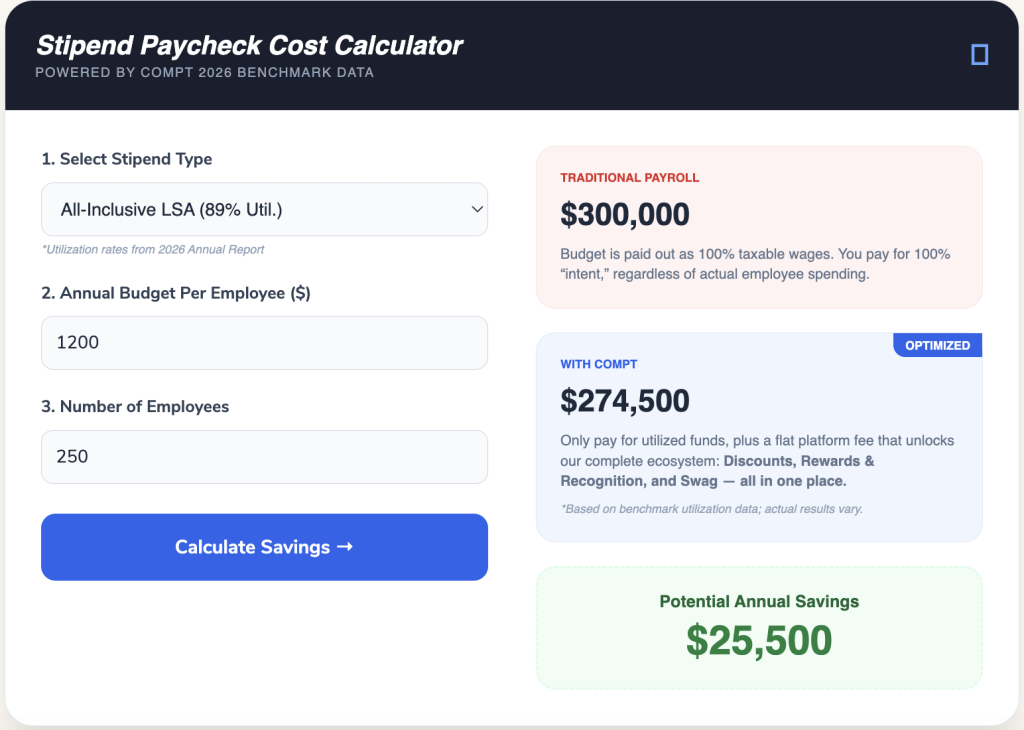
Stop overpaying for underused benefits.
Traditional payroll stipends are paid out 100% regardless of actual use.
With Compt, you only pay for the funds employees spend, saving you thousands while increasing benefits engagement.
How Rippling and Compt work together
In most organizations, Rippling and Compt serve different roles in your HR benefits tech stack.
Rippling: system of record for employee data
- Payroll processing
- Tax withholding
- HR and IT infrastructure
Compt: Flexible LSA and stipend program design
- Lifestyle benefit (stipend and LSA) management
- Expense review and approvals
- Built-in IRS compliance support
- Payroll reporting for reimbursements
The workflow between the two HR benefits software systems typically looks like this:
1. Employee data syncs from Rippling.
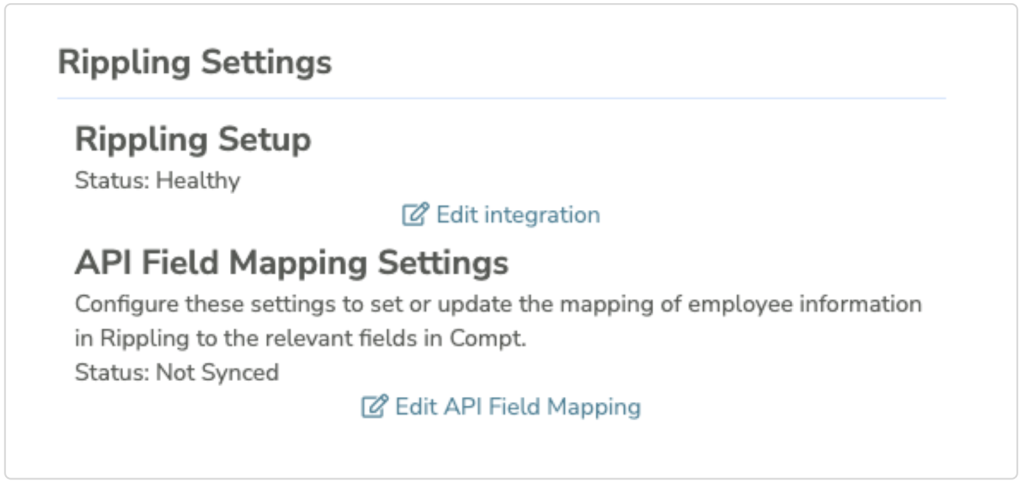
Use the Rippling App Shop to integrate Compt and Rippling and synchronize employee roster data automatically. Once connected, employee records such as name, role, department, and eligibility fields can be mapped directly from Rippling into Compt so employees are automatically added to the appropriate stipend or LSA programs.
2. Employers design lifestyle benefits in Compt.
HR teams create flexible, reimbursement-based programs such as:
- Wellness stipends or wellness wallets
- Professional development accounts
- Tuition reimbursement programs
- Remote work reimbursements (e.g., equipment, cell, internet)
- Family care, caregiving, and fertility benefits
- Company swag stores
- All-inclusive LSAs
You customize the categories, budget, funding cadence, and approval workflows for each program you design, with expert guidance from your dedicated Compt Customer Success Manager.
3. Your employees submit claims in Compt.
Employees purchase eligible items and submit receipts through Compt.
For example:
- Gym memberships
- Learning courses
- Childcare support
- Commuter costs
- Home office equipment
Program administrators or department managers review and approve submissions directly in the platform.
4. Compt categorizes expenses for payroll.
Compt determines whether expenses are taxable or nontaxable based on IRS guidelines, your company policy, and the benefit category selected during submission. This is critical because many fringe benefits, including most LSAs, are considered taxable compensation.
5. Payroll runs through Rippling.
Compt generates payroll-ready reports showing:
- Approved reimbursements
- Taxable vs non-taxable amounts
- Employee details required for payroll processing
Teams then include this data in their Rippling payroll run.
This approach keeps payroll calculations inside Rippling while ensuring benefits are administered properly upstream.
How the Rippling + Compt integration is set up
Companies connect Rippling and Compt through the Rippling App Shop integration.
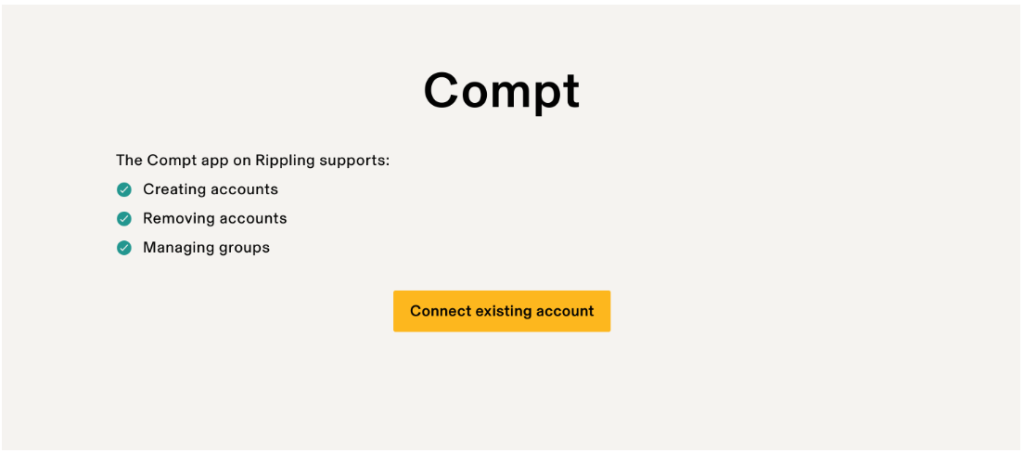
The setup process typically looks like this:
- Install the Compt app from Rippling’s App Shop.
- Enable the integration inside Compt’s Company Settings.
- Connect the existing Rippling account and authorize the data access requested.
- Select which employees should automatically sync to Compt.
- Confirm the connection to complete the integration.
Once enabled, employee data automatically syncs from Rippling to Compt so HR teams don’t need to manually maintain their employee list inside the benefits platform. New hires, role changes, and employee terminations update automatically as the systems stay synchronized.
To learn more, read our dedicated HelpScout article, “Integrating Rippling with Compt (Company Administrators).”
Example workflow: Rippling + Compt
After the integration is active, employee information updates automatically when changes occur in Rippling, such as new hires, role changes, or terminations. A typical benefits workflow might look like this:
- HR creates a quarterly wellness stipend in Compt.
- Employees submit gym or fitness expenses.
- Managers approve the reimbursement.
- Compt categorizes the expense as taxable.
- Payroll reports are generated for the next pay run.
- Finance processes payroll in Rippling with the reimbursement included.
This approach keeps payroll centralized while removing the operational work from HR and Finance teams.
Can Rippling manage stipends or Lifestyle Spending Accounts directly?
Rippling can process stipend reimbursements through payroll, but it is not designed to administer the full lifecycle of stipend or Lifestyle Spending Account (LSA) programs.
Running flexible benefits programs typically requires tools for:
- Defining eligible expense categories
- Collecting receipts and documentation
- Approving reimbursements
- Categorizing taxable vs. nontaxable benefits
- Tracking participation and utilization
- Generating payroll reports
Because of this, many organizations manage stipend and LSA programs in a dedicated lifestyle benefits platform while continuing to run payroll in Rippling.
Compt manages the program administration, while Rippling processes the reimbursements through payroll.
Want to see how it works? Request a demo of Compt.
Why many Rippling customers choose a reimbursement model for LSAs and stipends
Most lifestyle benefits platforms fall into two models:
- Card-based benefits: Employees receive a prepaid card to spend on eligible purchases.
- Reimbursement-based benefits: Employees submit receipts and are reimbursed through payroll.
Compt uses a reimbursement-first model for a few key reasons:
Reimbursement is better for IRS compliance.
With reimbursement workflows, employers can ensure purchases meet eligibility guidelines before funds are distributed. This reduces the risk of improper spending or tax compliance issues.
Reimbursement allows for stronger Finance and Payroll alignment.
Because reimbursements flow through payroll, taxable benefits are reported correctly and integrated with existing payroll systems.
Reimbursement supports a streamlined global benefits experience.
Many card-based solutions struggle to support international teams. Compt’s reimbursement model shines here because employees in 75+ countries can purchase from any local vendor and receive reimbursement in their own currency.
Psst … Read Compt’s expert breakdown of these two models, “Employee Debit Cards vs. Reimbursements: An Honest Comparison for HR Leaders.”
Common lifestyle benefits Rippling customers run through Compt
Companies using Rippling often implement Compt for benefits such as:
Wellness stipends or wellness wallets
Employees receive a monthly or quarterly budget for physical, mental, or financial wellness expenses.
Examples include:
- Gym memberships
- Fitness classes
- Therapy apps
- Massage therapy
- Meditation subscriptions
- Healthy groceries and other essentials
- Weight management, including GLP-1–related care
- Fitness trackers, Oura rings, glucose monitors, and other health-specific wearables
- Sleep optimization products
- Financial wellness tools and budgeting apps
Professional development stipends
Learning budgets help employees fund:
- Certifications and licensing exams
- Online courses (Coursera, MasterClass, Udemy)
- Industry conferences
- Books and research materials
- AI productivity tools and learning platforms
- Coding tools and developer environments
- Language learning apps
- Executive coaching or leadership training
Some organizations add manager approval workflows for these programs.
Remote work stipends
Distributed teams often reimburse expenses like:
- Home office equipment
- Coworking memberships
- Internet service
- Ergonomic furniture
Family care benefits
LSAs allow employees to apply funds toward:
- Childcare support
- Fertility services
- Elder care expenses
All-inclusive LSAs
Many organizations consolidate multiple small stipends into a single flexible program, or a Lifestyle Spending Account. Instead of running separate wellness, remote work, and learning benefits, they offer one LSA employees can use across several categories.
Some organizations allow LSAs to support broader well-being and engagement with categories inclusive of lifestyle and personal enrichment purchases, such as:
- Creative hobbies (art supplies, music lessons)
- Cooking classes
- Sports leagues
- Outdoor recreation gear
- Cultural experiences or museum memberships
Being inclusive in your stipend or LSA design significantly increases participation in the benefit because employees can use it in ways that reflect their real lives.
Psst … check out our guide, “What Are LSA-Eligible Expenses? A Practical Guide for HR and Finance,” by Compt’s VP Finance Megan Dunn.
When Rippling customers typically add Compt
Rippling customers usually adopt a lifestyle benefits platform when one of the following happens:
- They want to launch a LSA or a wellness wallet/stipend. LSAs require structured categories, expense validation, and payroll reporting.
- Manual stipend tracking becomes too complex. Spreadsheet workflows quickly become difficult to maintain as companies scale.
- Finance needs clearer payroll reporting. Benefits teams need a consistent way to track taxable benefits before payroll runs.
- They want employee data to sync automatically from HRIS to lifestyle benefits programs. As teams grow, manually maintaining employee lists inside stipend programs becomes time-consuming. Integrations automate employee eligibility and onboarding.
- Participation in traditional perks is low. Flexible benefits often achieve higher participation because employees can use them for needs that are relevant to their lives. Learn more in our 2026 Annual Lifestyle Benefits Benchmark Report.
Why companies using Rippling choose Compt for stipends and LSAs
Companies that run payroll in Rippling often choose Compt when they want to launch flexible lifestyle benefits such as stipends and all-inclusive LSAs without creating administrative headaches for HR, Finance, or Payroll.
Compt is a reimbursement-first lifestyle benefits platform that helps organizations design and manage stipends and Lifestyle Spending Accounts (LSAs) while complementing payroll processing inside their existing systems.
With Compt, teams can:
- Launch wellness stipends, professional development budgets, remote work reimbursements, and all-inclusive LSAs.
- Automatically categorize expenses as taxable or nontaxable based on IRS guidance.
- Provide employees with a simple reimbursement experience that works globally in 75+ countries.
- Generate CSVs and reports that plug cleanly into payroll workflows.
- Track participation and utilization to ensure benefits are actually used.
For organizations already using Rippling as their HR and payroll system, Compt provides the infrastructure needed to run modern lifestyle benefits programs without managing spreadsheets, tracking stipend funding and expenses manually, or leaning on guesswork for important IRS compliance decisions.
Request a demo to see how Compt works with Rippling to power stipends and LSAs for modern teams.
FAQs: Using Compt with Rippling for stipends and LSAs
Yes. Compt is a lifestyle benefits platform that connects with Rippling to synchronize employee roster data so that employees are automatically added to stipend or Lifestyle Spending Account (LSA) programs.
This integration allows HR teams to manage benefit eligibility without manually updating employee records when employees join, leave, or change roles.
Does Compt replace Rippling payroll?
No, Compt does not replace Rippling for payroll. Rippling continues to run payroll and handle tax withholding.
Compt manages the administration of lifestyle benefits, including program design, reimbursement workflows, expense validation, and taxable vs. nontaxable categorization.
Once reimbursements are approved, Compt generates payroll-ready data that can be delivered to payroll systems through direct API connections where supported, automated SFTP file transfers, or standardized payroll reports that can be uploaded into Rippling payroll runs.
This approach allows companies to administer stipend and LSA programs in Compt while keeping payroll processing inside Rippling.
Can you use Rippling and Compt together?
Yes, you can use Rippling and Compt together. Many companies use Rippling as their HRIS and payroll system while using Compt to administer stipends and Lifestyle Spending Accounts (LSAs).
Rippling manages payroll and employee records, while Compt manages benefit programs, reimbursements, and payroll reporting for those benefits.
Employee data automatically syncs from Rippling to Compt through the integration, so new hires, role changes, and terminations update benefit eligibility without manual HR administration.
Payroll reporting generated in Compt can then be included in Rippling payroll runs.
Can employee data automatically sync from Rippling to Compt?
Yes. When Rippling and Compt are connected through the integration, employee roster data automatically syncs from Rippling into Compt.
This means new hires, role changes, department updates, and terminations can update benefit eligibility without requiring HR teams to manually maintain employee lists inside the stipend platform.
Automatic employee syncing helps ensure that stipend and Lifestyle Spending Account (LSA) programs stay aligned with the company’s HR system of record.
How do reimbursements from Compt appear in Rippling payroll?
When reimbursements are approved in Compt, the platform generates payroll-ready data that includes employee identifiers, reimbursement amounts, and taxable versus nontaxable classifications based on IRS guidelines and company policy.
Depending on the payroll system configuration, this data can be delivered through API integrations, automated file transfers, or standardized payroll reports that payroll teams include in their Rippling payroll runs.
This approach allows Finance teams to keep payroll calculations centralized in Rippling while ensuring stipend and LSA reimbursements are categorized correctly.
Which HR/finance systems does Compt integrate with (SSO, API, file sync)?
Compt integrates with all major HRIS and payroll systems to keep employee data, reimbursements, and payroll reporting synchronized across platforms.
For employee data, Compt connects with HRIS and payroll systems through APIs or secure file transfers (SFTP) to automatically sync employee roster information such as new hires, role changes, and terminations.
For payroll workflows, Compt supports multiple options depending on the system your organization uses. Some payroll providers support direct API connections for pushing reimbursement data into payroll, while others can receive automated payroll files via SFTP. Compt also generates standardized payroll reports that can be uploaded into any payroll system.
Compt also supports Single Sign-On (SSO) with common identity providers such as Okta, Google Workspace, Microsoft Entra ID, and OneLogin, allowing employees to securely access the platform using their existing company credentials.
For finance and accounting workflows, Compt provides configurable reporting exports so reimbursement and stipend data can be easily imported into accounting or expense management systems.
Which employee benefits software integrates best with payroll to automate reimbursement of lifestyle perks?
Benefits platforms designed specifically for reimbursement-based programs tend to integrate best with payroll systems because they generate payroll-ready reports that include approved reimbursements, taxable vs. nontaxable classifications based on IRS guidelines and your program design, and employee payroll identifiers.
Compt administers stipends and LSAs reimbursements in its flexible lifestyle benefits platform while generating reports that can be included in payroll runs in tools such as Rippling.
Do stipend platforms integrate well with our HRIS and payroll systems?
Yes. Reimbursement-first stipend and LSA platforms like Compt integrate with HRIS systems to automatically sync employee roster data and eligibility.
These integrations typically use APIs or secure file transfers (SFTP) to keep employee records synchronized as employees join, change roles, or leave the company.
For payroll workflows, reimbursement data can be delivered to payroll systems through API integrations where supported, automated SFTP file transfers, or standardized payroll exports.
This approach allows companies to administer benefits in a dedicated platform while payroll processing continues in their existing payroll system.
Which well-being platforms integrate with payroll to make tax-advantaged gym reimbursements seamless across multiple states?
Compt supports reimbursement workflows and payroll reporting for well-being stipends and enables employers to manage gym or wellness reimbursements across multiple states.
Because many wellness reimbursements are treated as taxable fringe benefits, Compt categorizes expenses so payroll teams can report them correctly.
Why not manage stipends directly inside payroll software?
Payroll systems are designed to process compensation, not administer benefits programs. Managing stipends directly in payroll often requires manual tracking of eligible expenses, receipts and documentation, taxable vs. nontaxable classifications, and benefits participation and utilization. It also means employees experience the benefit as compensation, which can make it difficult to remove or change the benefit later.
A dedicated benefits platform like Compt handles these administrative tasks before payroll runs, reducing manual work for HR and Finance teams. It will save you money, too — see our “Stipends in Paychecks: A Cost Calculator” tool to see how.