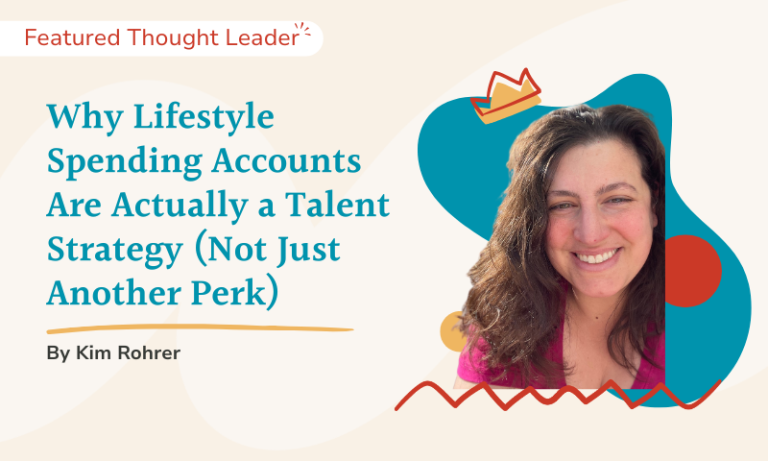

Written by Kim Rohrer
Kim Rohrer is a veteran people leader, writer, speaker, and advisor with over 15 years of experience building human-centered cultures at high-growth companies. She is the founder of Patchwork Portfolio, author of the I Care Too Much newsletter, and co-host of the HR Confessions podcast. Today, Kim shapes the future of work through a variety of roles, drawing on her HR strategy and storytelling experience to build cultures worth talking about. Her work ranges from Employee Experience and Employer Brand to Communications and Community.

Connect with Kim on LinkedIn.
Picture this: You’re an HR leader preparing to announce a shiny new perk. Free gym memberships for everyone! A meditation app subscription! Maybe even a snack wall if the budget allows!
You hit send on the announcement email, expecting celebration. Instead, you get … crickets. Polite thank-yous, maybe. But engagement falls flat, and your retention numbers? Still not where you want them to be.
Here’s what’s happening: We keep adding perks while people are making hard choices at home about what they can afford, stretching paychecks that haven’t kept pace with rising costs. And a kombucha tap doesn’t pay for childcare.
What if the problem isn’t that we’re not offering enough, but that we’re not offering the right kind of support?
One size fits no one: a total rewards reality
The economic reality for most workers is brutal. So when your total rewards structure includes a $150 monthly gym membership as a wellness benefit, but your employee is a single father with a 90-minute commute who desperately needs help with childcare? That benefit doesn’t just miss the mark — it highlights how disconnected the company is from his actual life, decreasing trust and tanking engagement.
Other common mismatches:
- A fancy coffee subscription when someone is struggling to cover groceries
- A meditation app when therapy copays are the real barrier to mental health support
- A professional development budget when student loan payments are crushing them
- An on-site massage chair when they need help paying for gas to get to the office
This isn’t about employees being ungrateful. It’s about benefits that sound good on your careers page but don’t actually help people live their lives.
And here’s the retention risk: when your benefits feel disconnected from reality, your employees feel unseen.
The 2025 Gallup Employee Retention and Attraction Report revealed that “Pay/Benefits” is the most frequent reason that Americans are leaving their jobs. Your cash compensation practices matter, yes, but so does the rest of your total rewards strategy. Because people leave when the gap between what you offer and what they need feels too wide to ignore.
How stipends align with talent strategy and retention goals
This is where Lifestyle Spending Accounts and flexible stipends start to make sense as a part of your overall talent strategy. You don’t have to anticipate every employee’s needs, or even know the often-personal details of their lives that necessitate using specific benefits.
When you give people a stipend, you’re saying: “We trust you to know what support looks like for you.”
Real retention requires more than just flexible benefits, though; it also depends on competitive compensation, work-life balance, career development, and company culture. What people value varies wildly from person to person, and something that seems small might make a lasting impact on someone’s life.
People might use flexible stipends for:
- Commuting costs (e.g., gas, tolls, public transit)
- Childcare or elder care support
- Mental health services not fully covered by insurance
- A home-office setup that actually makes remote work sustainable
- Paying down high-interest debt, such as student loans
- Emergency household expenses that would otherwise go on a credit card
When benefits actually address people’s real needs, they fit into the bigger picture of their holistic employee experience, building more connection to the organization and a higher likelihood of retention.
And this approach helps with recruitment too — candidates can tell the difference between perks theater and a company that’s actually thinking about real life.
What this looks like in practice: from performative perks to benefits that work
If you’re rethinking your benefits strategy with retention in mind, start by asking what people actually need.
Look at your engagement survey results. Review themes from exit interviews and stay conversations. Talk to your managers about what they’re hearing in one-on-ones. You might find that your carefully curated benefits package is solving problems people don’t have, while ignoring the ones keeping them up at night.
Sometimes low adoption is about the offerings themselves, but often it’s about how benefits are communicated or which groups they resonate with. Maybe a particular demographic really loves one of your benefits, and you could use that story for candidate attraction efforts. Understanding your employees’ experience helps you make better decisions across your talent strategy.
Once you’ve launched an LSA, the spending data becomes another listening tool. If your team spends stipend money on therapy, that’s a message about mental load. If they spend it on continuing education, that’s hunger for growth. If they spend it on caregiving expenses, that’s data on how your workforce is actually structured. The patterns show you where pressure is building before burnout becomes churn and give you insights into adjusting programs, forecasting needs, and supporting your workforce more proactively.
Think about how flexible stipends fit into your broader compensation philosophy. LSAs aren’t a replacement for fair pay or good health insurance — they’re a supplement that acknowledges people’s lives are different and their needs don’t fit into neat categories.
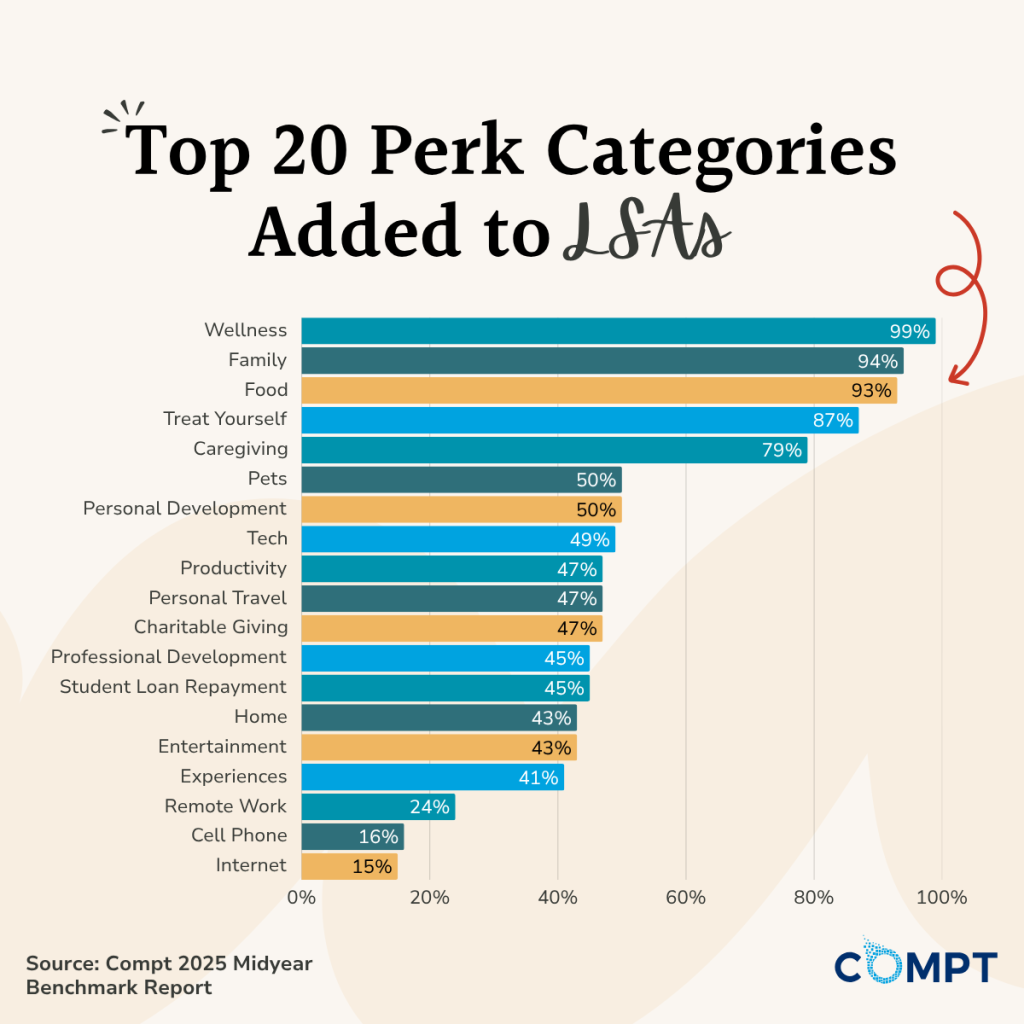
Tools like Compt make this kind of flexibility manageable. Instead of trying to administer multiple point solutions for different life stages and circumstances, you can offer real choice within a single system.
And yes, there’s ROI here. Losing good people is expensive: recruiting costs, onboarding time, lost productivity, institutional knowledge walking out the door. A flexible benefits approach that improves retention is a cost-effective investment in your talent strategy.
The real strategy: flexible benefits that support whole humans
If you’re struggling with retention, ask yourself: do your benefits match the reality your employees (and prospective employees!) are living in?
The old playbook — more perks! fancier perks! — isn’t working because it was never really about the perks. Retention happens when people feel seen, supported, and trusted.
And don’t forget the outside world: when candidates peruse your career page, do they see benefits that reflect their needs, or a standard copy-paste job from the latest perks trends? Are you trying to hire specific demographics, or for a diverse team? Does the way you talk about benefits and perks tell that story?
Lifestyle Spending Accounts aren’t a magic bullet. But they’re a signal that you’re paying attention, that you understand your employees are whole humans with complex needs, and that you’re willing to meet them where they are. Today’s HR Leaders need to be thinking about how to create personalized, equitable, and adaptable benefits to support their organizations. LSAs make that goal attainable.
“Talent strategy” sounds fancy. But really, it’s just about treating people like adults with different lives, different priorities, and different definitions of what “support” actually means.
If you can do that, you might find your retention numbers (and other business metrics, too!) starting to move in the right direction.
Stipends and LSAs aren’t just perks anymore: they’re a strategic part of any modern total rewards strategy. They’re easy-peasy to administer, universally helpful for employees, and designed for today’s flexible, unpredictable world of work.