
[Getting Personal] Molly Dennen’s Personalized Toolbox That Every Company Needs
What little kid dreams of being a fractional learning and development specialist? I certainly didn’t (how do you incorporate that into the dress-up box?). And at the beginning, Molly Dennen never did, either. But that’s where she ended up — and from our recent conversation, it’s clear she knows exactly what she’s doing.
I spoke with Molly Dennen, Fractional Learning and Development Strategist, on our monthly podcast ‘Getting Personal.’
Dennen let me in on her insights about how storytelling is key to positioning yourself as a strong candidate in today’s job economy — and whether the ‘ideal’ L&D program that can develop these kinds of candidates is a pipe dream. Just what are the professional development essentials individuals (and teams) need to succeed?
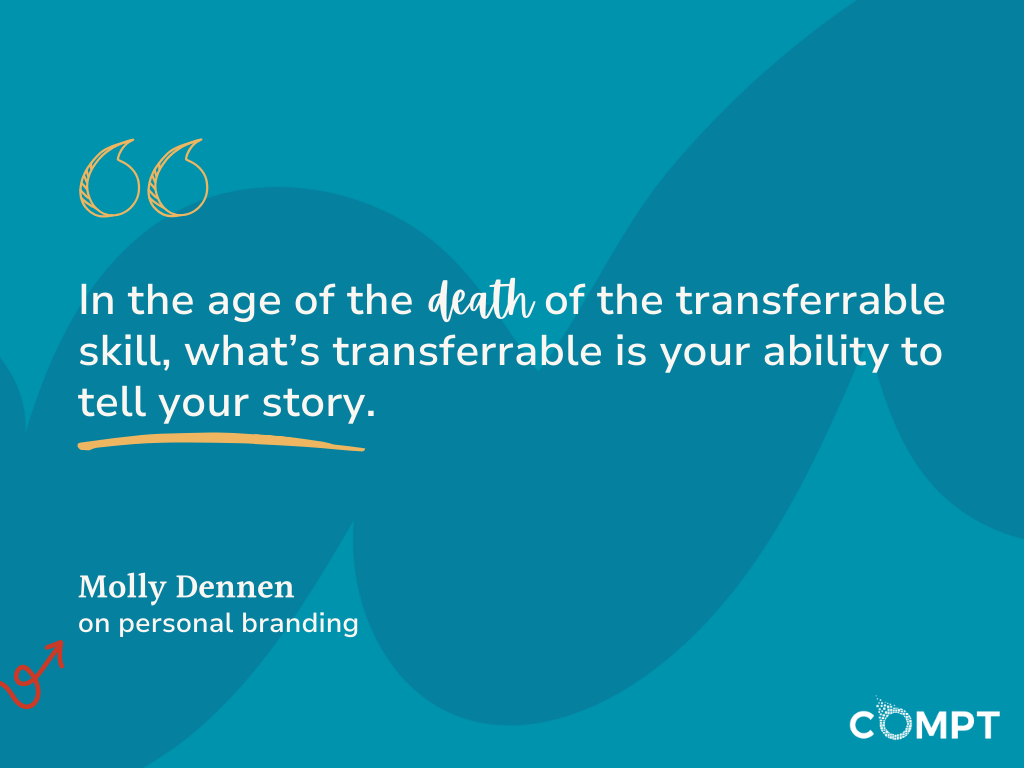
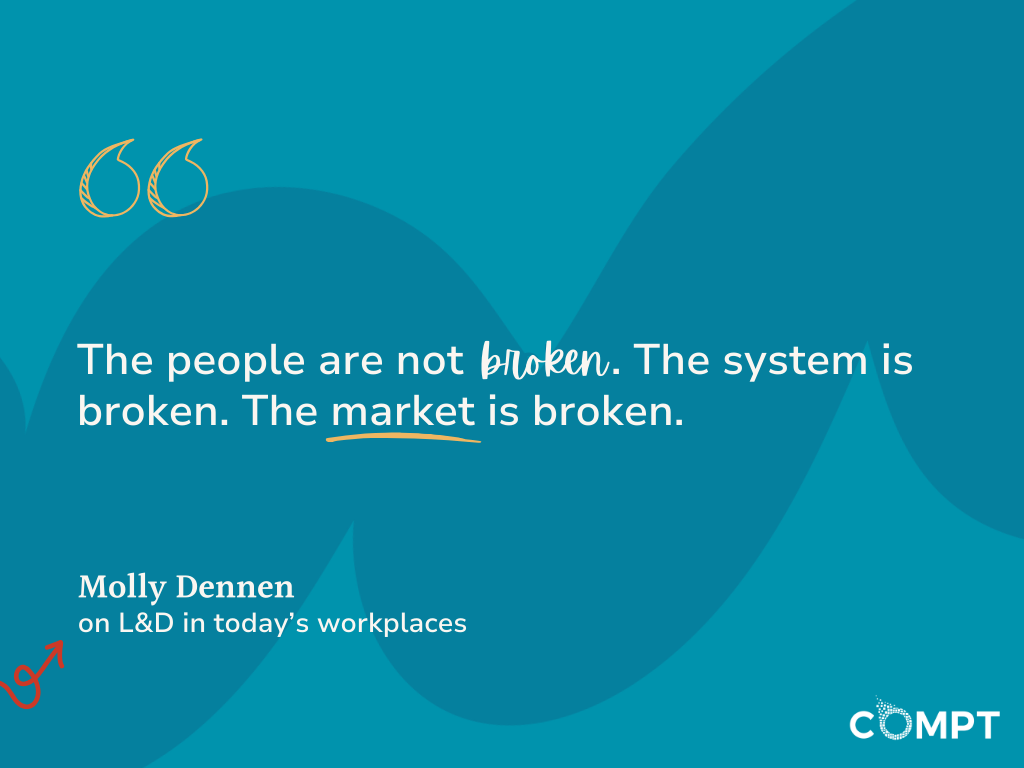
“In the age of the death of the transferable skill,” Dennen said during the course of our conversation, “what’s transferable is your ability to tell your story.”
My takeaway from Dennen’s story was what every HR professional should keep in mind. Take a look.
Building managers who lead well
Dennen took a long and winding road to get to where she is today. With a bachelor’s degree in Spanish and political science plus a master’s degree in international education, she spent a large chunk of her career working in higher education.
But for Dennen, a major realization happened when she realized that education had failed her — “in so many ways that I didn’t anticipate.” When she discovered learning and development, which she describes as school in a professional setting, she was hooked.
Now, Dennen’s goal is to partner with purpose-driven organizations who are truly invested in their people to help them understand how to deliver professional development essentials to their people.
And her personal learning journey has a direct influence on how she approaches L&D and professional development work with her clients today.
Dennen was going to miss a week of school. All of her teachers were understanding — except this one. “He essentially berated me in front of my friends and peers and told me that I had my priorities completely misaligned. It was crazy. I was 17.”
“I had a teacher [in high school] who was incredibly demanding and rigid. I was an athlete growing up and the week before senior year started, I tore my ACL, so I had to get knee surgery.”
Because of that experience, she’s become a big believer that managers can make or break the experience for their people.
“I want organizations to do better. I want organizations to take learning seriously and take their people seriously and do the things they need to do to set people up for success. That’s the ideal scenario.”
And when the ideal scenario isn’t possible? People need to have the tools for themselves to navigate various workplace scenarios and future-proof their professional development. Those tools are what Dennen aims to help provide.

Thinking beyond the resume for better professional development
As the workplace landscape has become more and more competitive, storytelling is one crucial tool that people need to cultivate. Simply having a resume is often no longer sufficient to get a promotion or a raise or a new job.
“You have to tell a story right now. You have to have a resume, you have to have a LinkedIn presence, you have to have a personal brand,” Dennen listed off. “You have to have this story that you know how to tell about yourself. You can’t just hand your resume to someone and they’re going to see it and be like, I get it. I see how you belong here. You have to be able to walk them through step by step how each of your experiences have scaffolded to make you the perfect person for this job.”
Dennen talks a lot with her clients about cultivating a personal brand.
I’ve leapfrogged from news to PR to brand and comms, and I know firsthand that personal branding is a job on top of a job — but one that’s all too necessary. Sure, data points about what you’ve accomplished are great. At the end of the day, however, people aren’t going to see how those results fit into the larger picture unless you show them.
“In the age of the death of the transferable skill,” Dennen summarized, “what’s transferable is your ability to tell your story.”
Building your professional development toolbox
I loved what Dennen said about telling your story and how it adds to the overall picture of professional development essentials. But not everyone is a natural storyteller. Is the ‘perfect’ professional development program a dream — or does Dennen have a secret formula she uses to teach people how to advocate for themselves?
Her immediate response?
According to Dennen, we’re “hard skilling too close to the sun.” Learning doesn’t happen in a vacuum. Intersectionality applies not only to identity, but also to our lived experiences.
Looking at my own experience, I have a criminal justice degree. I have a journalism background. At first glance, they might not make much sense together. But they add together to make up different facets of my skill set. And Dennen thinks we need to focus more on these broader soft skills that make us dynamic and interesting people as part of the new ‘toolbox’ of professional development essentials.
“The problem is that we’ve asked people to not be themselves. We’ve asked them to be a very specific version with 15 years of experience using this one program, this one app, this one, whatever it may be. And so we’ve asked them to ignore the other components that make them interesting people. The ideal is fixing that.”

[Bookmark This] Building a professional development toolbox
There’s no magical formula to reverse this trend. But there is a toolbox Dennen likes to help people build.
“[The toolbox helps] them navigate all of these intricacies of storytelling, of being visible in front of leadership, of interviewing, of articulating value, all of these things that need to happen to get to where you want to go,” she said.
Everybody’s toolbox is going to look a little different. The goal is for yours to feel natural for you. Examples of Dennen’s professional development toolbox makeup might include:
- Keeping a learning journal. Jot down reflections on what you’re realizing about yourself, your story, and how you might fit into various workplace scenarios.
- Getting coaching sessions. This could be an online course, a group session, or 1:1 coaching (with an L&D coach like Molly, or with a coach who specializes in areas like personal branding or another skill you’ve been wanting to learn).
- Learning how to time block. Molly called this out as a valuable skill that can help you move forward in managing your personal productivity.
Ultimately, your personal toolbox is a set of tools that will get you from where you are to where you want to go.

Develop better people with Compt
“Disparate experiences or disjointed learnings or a random set of skills — that’s what makes you unique,” Dennen said as we closed out our conversation. “You are not a two-page bulleted resume. There’s a story there.”
L&D helps people tap into their ability to tell that story about themselves. And Compt’s professional development software helps your employees create their own professional development essentials and build the toolbox they need.
With features like a centralized learning hub, real-time tracking, and easy budgeting, professional development through Compt is simple and headache-free. See how our learning and development platform can work for you. Request a demo today.

 No receipt chasing